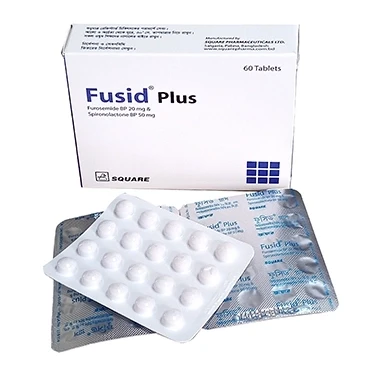
Fusid Plus Tablet, Furosemide + Spironolactone 20 mg+50 mg
Inhouse product
-
 ৳11.40
৳12.00 -
৳42.75
৳45.00 -
৳16.63
৳17.50 -
৳2.14
৳2.25 -
৳9.50
৳10.00


Reviews & Ratings
Indications
Frusemide &
Spironolactone combination is indicated in-
- Essential hypertension
- Chronic congestive heart
failure
- Hepatic cirrhosis, with
collection of fluid in the abdominal cavity (ascites)
- Swelling due to excess fluid
retention (edema)
- Hyperaldosteronism
- Resistant edema associated with
secondary hyperaldosteronism
* রেজিস্টার্ড চিকিৎসকের পরামর্শ মোতাবেক ঔষধ সেবন করুন'
Pharmacology
Spironolactone
(potassium sparing diuretic) and Furosemide (loop diuretic) have different but
complementary mechanisms and sites of action. Therefore, when given together
they produce additive or synergistic diuretic. The Furosemide component
inhibits the Na+/K+/2Cl- co-transporter in the ascending Loop of Henle and
blocks the reabsorption of sodium, potassium and chloride ions; thereby
increasing the quantity of sodium and the volume of water excreted in the
urine. This characteristically induces potassium loss. The spironolactone
component inhibits the reabsorption of sodium in exchange for potassium at the
distal tubule by antagonising the action of aldosterone so that sodium
excretion is greatly favoured and the excess loss of potassium, induced by the
Furosemide, is reduced
Dosage & Administration
Furosemide 20 and
spironolactone 50 mg: 1 to 4 tablets daily
(20 to 80 mg of Furosemide and 50 to 200 mg of spironolactone) according to the
patient’s response.
Furosemide 40 and
spironolactone 50 mg: For previously
stabilized patients requiring a higher dosage of spironolactone and Furosemide,
This tablet can be used at a dose of one to two tablets daily (Furosemide 40 to
80 mg and spironolactone 50 to 100 mg).
Use in children: Spironolactone and Furosemide is not
suitable for use in children. Spironolactone and Furosemide may both be
excreted more slowly in the elderly.
* রেজিস্টার্ড চিকিৎসকের পরামর্শ মোতাবেক ঔষধ সেবন করুন'
Interaction
When taken together
with ACE inhibitors or potassium salts there is an increased risk of
hyperkalemia. Spironolactone increases the levels of cardiac glycosides such as
digoxin in the blood and this may result in digitalis toxicity. Corticosteroids
may cause hypokalemia if they are used with Spironolactone. The blood pressure
lowering and diuretic effects of Furosemide may be reduced or abolished when
used together with indomethacin and possibly other non-steroidal
anti-inflammatory drugs (NSAIDs). Furosemide may increase the ototoxicity of
aminoglycoside antibiotics. Simultaneous administration of sucralfate and
Furosemide may reduce the natriuretic and anti-hypertensive effect of Furosemide.
Contraindications
Contraindicated in
patients with anuria, acute renal insufficiency, rapidly deteriorating or
severe impairment of renal function (creatinine clearance <30 ml/min),
hyperkalaemia, Addison's disease and in patients who are hypersensitive to
Spironolactone, Furosemide or sulphonamides.
Side Effects
Spironolactone may
give rise to headache and drowsiness and gastrointestinal distress, including
cramp and diarrhoea. Ataxia, mental confusion, and skin rashes have been
reported as side effect. Gynaecomastia is not uncommon and in rare cases breast
enlargement may persist. Other endocrine disorders including hirsutism,
deepening of the voice, menstrual irregularities and impotence. Transient
increase in blood-urea-nitrogen concentrations may occur and mild acidosis has
been reported. Spironolactone may cause hyponatremia and hyperkalemia.
Excessive diuresis may result in dehydration and reduction in blood volume with
circulatory collapse with the possibility of vascular thrombosis and embolism particularly
in elderly patients. Serious depletion of potassium and magnesium may lead to
cardiac arrhythmias.
Pregnancy & Lactation
Pregnancy: Spironolactone and its metabolites may cross
the placental barrier. The use of spironolactone in pregnant women requires
that the anticipated benefit be weighed against the possible hazards to the
mother and fetus. Animal teratology studies indicate that Furosemide may cause
fetal abnormalities. Therefore, Furosemide should only be used in women in
child bearing age when appropriate contraceptive measures are taken or if the
potential benefits justify the potential risks to the fetus.
Lactation: Metabolites of Spironolactone have been
detected in breast milk. If use of Spironolactone is considered essential, an
alternative method of infant feeding should be instituted. Furosemide is
excreted in breast milk and breast-feeding should be discontinued if treatment
is essential.
Precautions & Warnings
Caution should be
taken in patients liable to electrolyte deficiency. Fusid Plus should also be
used with caution in diabetes, enlarged prostate, hypotension and in
hypovolemia.
Therapeutic Class
Potassium-sparing
diuretics, Potassium-sparing diuretics & Aldosterone antagonists
Storage Conditions
Keep below 30°C
temperature, away from light & moisture. Keep out of the reach of children.
Frequently Bought Products
Product Queries (0)
Login Or Registerto submit your questions to seller
Other Questions
No none asked to seller yet
-
৳11.40
৳12.00 -
৳42.75
৳45.00 -
৳16.63
৳17.50 -
৳2.14
৳2.25 -
৳9.50
৳10.00