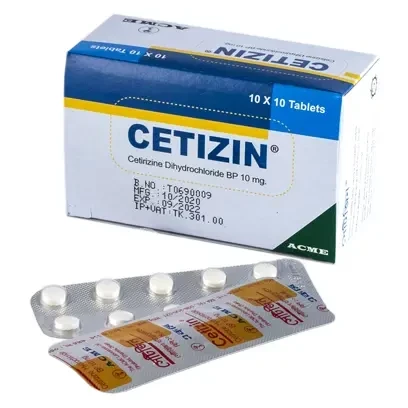
Cetizin Tablet, Cetirizine Hydrochloride 10 mg
Inhouse product
-
 ৳11.40
৳12.00 -
৳42.75
৳45.00 -
৳16.63
৳17.50 -
৳2.14
৳2.25 -
৳9.50
৳10.00


Reviews & Ratings
Indications
Cetizin is indicated
for the relief of symptoms associated with seasonal & perennial allergic
rhinitis. It is also indicated for the treatment of the uncomplicated skin
manifestations of chronic idiopathic urticaria and allergen induced asthma.
* রেজিস্টার্ড চিকিৎসকের পরামর্শ মোতাবেক ঔষধ সেবন করুন'
Pharmacology
Cetirizine
Hydrochloride is a potent H1 receptor antagonist without any significant
anticholinergic and antiserotonic effects. At pharmacologically active dose
levels, it has almost no drowsiness effect and does not cause behavioral
changes. It inhibits the histamine-mediated early phase of the allergic
reaction and also reduces the migration of inflammatory cells and the release
of mediators associated with the late phase of the allergic reaction.
Pharmacokinetics: Cetirizine 10 mg achieves peak plasma concentrations of 257
mcg/L within one hour of administration (980 mcg/L in children). Food does not
affect the extent of absorption, but it may slightly reduce the rate. Peak
blood levels 0.3 micrograms/ml are reached between thirty & sixty minutes
after administration of 10 mg dose of Cetirizine. Its plasma half-life is
approximately 11 hours. Absorption is very consistent from one subject to the
next. Its renal clearance is 30 ml/minute and the excretion half-life is
approximately nine hours.
Dosage &
Administration
Cetirizine
oral dosage form:
- Adults and Children 6 years and
older: 1 tablet or 2 teaspoonfuls daily (or 1 teaspoonful twice daily).
- Children 2-6 years: 1
teaspoonful once daily or 1/2 teaspoonful twice daily.
- Children 6 months to 2 years :
1/2 teaspoonful once daily. The dose in children 12-23 months of age can
be increased to a maximum dose as 1/2 teaspoonful every 12 hours.
Cetirizine
injectable dosage form:
Cetirizine is a single use injectable product for intravenous administration
only. The recommended dosage regimen is once every 24 hours as needed for
treatment of acute urticaria. Administer Cetirizine as an intravenous push over
a period of 1 to 2 minutes. Cetirizine is not recommended in pediatric patients
less than 6 years of age with impaired renal or hepatic function.
- Adults and adolescents 12 years
of age and older: The recommended dosage is 10 mg administered by
intravenous injection.
- Children 6 to 11 years of age:
The recommended dosage is 5 mg or 10 mg depending on symptom severity
administered by intravenous injection.
- Children 6 months to 5 years of
age: The recommended dosage is 2.5 mg administered by intravenous
injection.
* রেজিস্টার্ড চিকিৎসকের পরামর্শ মোতাবেক ঔষধ সেবন করুন'
Interaction
No clinically
significant drug interactions have been found with Theophylline, Azithromycin,
Pseudoephedrine, Ketoconazole or Erythromycin and with other drugs.
Contraindications
It is contraindicated
in patients with a history of hypersensitivity to Cetirizine or hydroxyzine.
Side Effects
The most common side
effects that occurred more frequently on Cetizin is somnolence.
Pregnancy &
Lactation
US FDA Pregnancy
Category of Cetirizine Hydrochloride is B. There are, however, no adequate and
well-controlled studies in pregnant women. Because animal reproduction studies
are not always predictive of human response, this drug should be used during
pregnancy only if clearly needed. Cetirizine Hydrochloride has been shown to be
excreted in human milk. So, caution should be exercised when Cetirizine
Hydrochloride is administered to a nursing woman.
Precautions &
Warnings
Caution should be
exercised when driving a car or operating a heavy machinery.
Use in Special
Populations
Hepatic or renal
insufficiency: In patients with
mild to moderate hepatic and renal impairment, total body clearance of Cetizin
is reduced and AUC and half-life increased by about 2 to 3 fold. Clearance is
reduced in proportion to the decline in creatinine clearance. Plasma levels are
unaffected by hemodialysis. The plasma elimination half-life in dialysis
patients is approximately 20 hours and the plasma AUC is increased by about
threefold.
Pediatric Use: The safety of Cetizin has been demonstrated
in pediatric patients aged 6 months to 5 years.
Elderly use: The clearance of Cetizin is reduced in
elderly patients, but only in proportion to the decrease in creatinine
clearance.
Therapeutic Class
Sedating
Anti-histamine
Storage Conditions
Keep in a dry place
away from light and heat. Keep out of the reach of children.
Frequently Bought Products


Ranolin XR Tablet (Extended Release), Ranolazine 500 mg
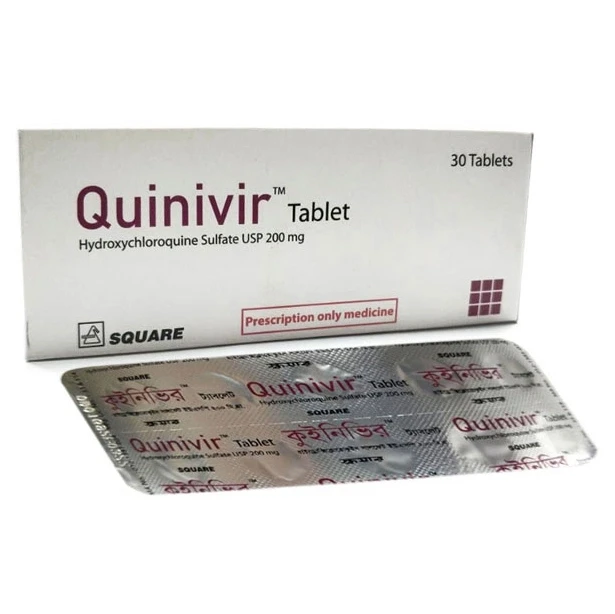
Quinivir Tablet, Hydroxychloroquine Sulphate 200 mg
![Evit Capsule, Vitamin E [Alpha Tocopherol Acetate] 400 mg](https://old.skpharma.com.bd/public/uploads/all/noANTE8KMrZRXll4gZvRTsEIeOc3wbnL3IgJVJ98.webp)

Facticin Tablet, Gemifloxacin 320 mg

Prebalin CR Tablet (Extended Release), Pregabalin 165 mg

Tazocilin IV Infusion, Piperacillin + Tazobactam (4 gm+0.5 gm)/vial

Tebast Tablet, Ebastine 10 mg

Deprex Tablet, Olanzapine 5 mg
Product Queries (0)
Login Or Registerto submit your questions to seller
Other Questions
No none asked to seller yet
-
৳11.40
৳12.00 -
৳42.75
৳45.00 -
৳16.63
৳17.50 -
৳2.14
৳2.25 -
৳9.50
৳10.00